Rafael Coleman · 6 September 2026
The Hidden Networks Beneath Dune Gardens: Mycorrhizal Relationships and Plant Survival
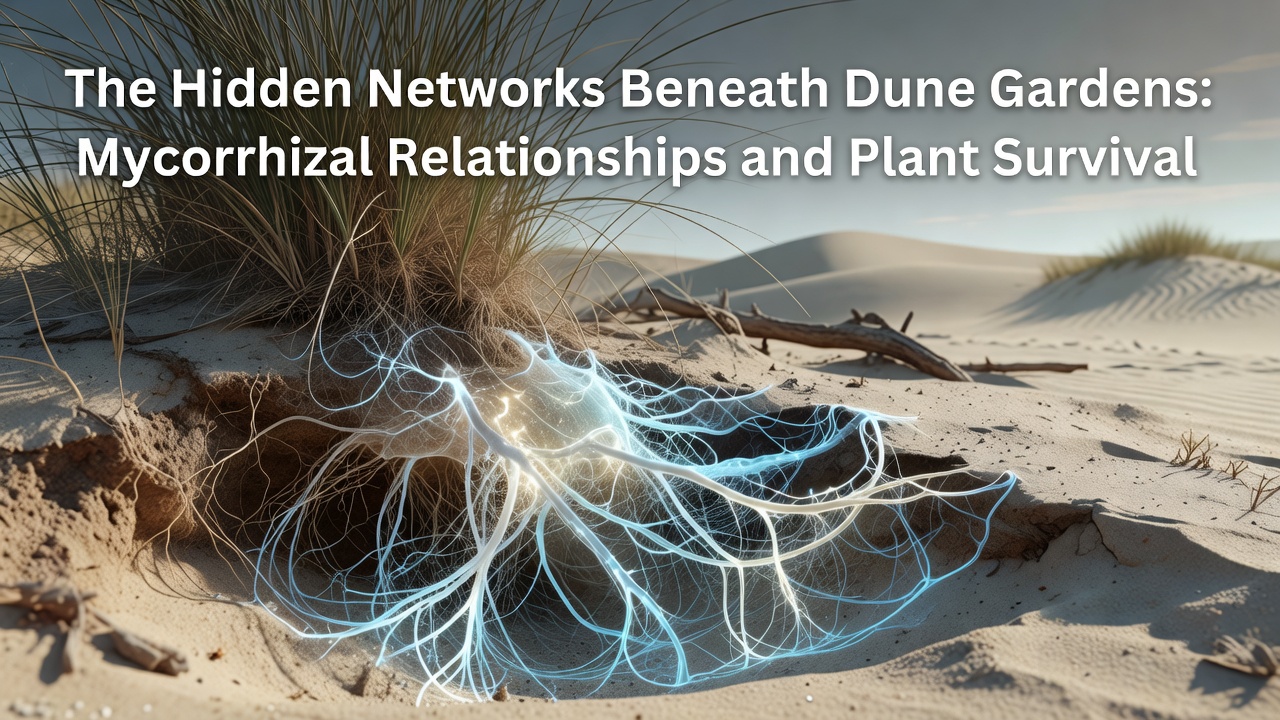
Coastal dune gardens present harsh conditions where shifting sands, low nutrient levels, and limited water create constant challenges for plant growth, yet beneath the surface extensive fungal networks known as mycorrhizae form critical partnerships that enable survival. These symbiotic associations link plant roots with specialized fungi, allowing exchange of resources in environments where independent growth would often fail. Researchers have documented how arbuscular mycorrhizal fungi penetrate root cells of many dune species while ectomycorrhizal types form sheaths around roots of certain shrubs and trees, each type adapting to the sandy substrate in distinct ways.
Formation and Structure of Mycorrhizal Networks in Dunes
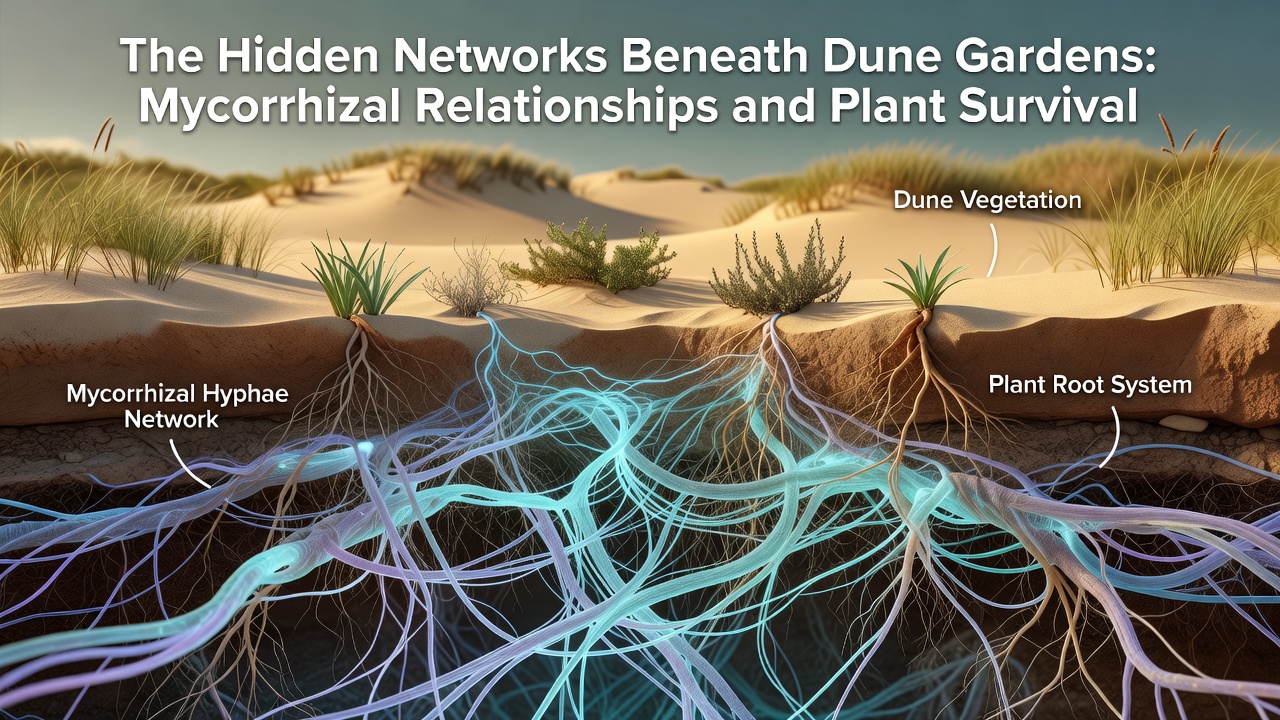
Dune soils typically contain sparse organic matter and rapid drainage that depletes moisture and minerals quickly, conditions that prompt plants to rely on fungal hyphae extending far beyond root zones. Hyphal threads explore volumes of sand unreachable by roots alone, accessing phosphorus, nitrogen, and trace elements locked in mineral particles or distant organic debris. Studies from coastal research stations show that these networks develop rapidly after initial plant colonization, with fungal spores germinating in response to root exudates and establishing connections within weeks of seedling emergence.
Network complexity increases as multiple plant species link through shared fungal partners, creating underground pathways for resource transfer. Data from long-term monitoring plots indicate that older dune systems support denser hyphal mats compared with newly formed foredunes, where pioneer species first establish limited associations before broader networks expand. Seasonal shifts influence activity, with warmer months accelerating fungal growth while cooler periods slow exchange rates without halting them entirely.
Resource Exchange Mechanisms Supporting Plant Resilience
Plants supply fungi with carbohydrates produced through photosynthesis, while fungi deliver soil nutrients and water absorbed through their extensive mycelium. In dune settings this exchange proves especially valuable during drought episodes when surface evaporation leaves deeper sands relatively moist yet inaccessible to shallow roots. Evidence from controlled dune garden experiments demonstrates that mycorrhizal plants maintain higher photosynthetic rates and lower stress indicators than non-mycorrhizal counterparts under identical water restrictions.
Protection against pathogens also emerges from these relationships, as fungal partners produce compounds that inhibit harmful soil organisms and strengthen plant cell walls. Observers note reduced incidence of root rot and wilt diseases in connected dune plant communities compared with isolated specimens. Carbon flow within networks sometimes moves from established plants to younger ones, supporting regeneration after sand burial or storm damage common in these dynamic landscapes.
Plant Species Interactions and Observed Patterns
Common dune grasses such as American beachgrass and European marram grass form strong arbuscular mycorrhizal associations that stabilize shifting sands through enhanced root binding. Shrubs including bayberry and beach plum often host both arbuscular and ectomycorrhizal fungi, expanding their nutrient access across heterogeneous dune profiles. Field surveys conducted by teams from the USDA Forest Service reveal that species diversity within fungal communities correlates with greater overall plant cover and reduced erosion rates on stabilized dunes.
Introduced garden species in managed dune landscapes benefit similarly when compatible fungal inoculum exists in the soil, though some exotic plants require inoculation to establish effective partnerships. Records from restoration projects show survival rates rising significantly once mycorrhizal treatments are applied during planting. Seasonal monitoring through September 2026 continues to track how warming trends affect fungal activity and plant-fungus synchrony across multiple sites.
Research Findings and Broader Ecological Context
Long-term data compiled by Australian research institutions highlight parallels between North American dune systems and those studied along southern coasts, where similar fungal strategies support plant persistence amid comparable nutrient scarcity. Laboratory analyses confirm that hyphal length per gram of soil increases markedly in mycorrhizal treatments, directly corresponding to improved mineral uptake measurements. Pathogen suppression experiments further illustrate how network presence alters microbial community composition in favor of beneficial organisms.
Restoration practitioners apply these insights when selecting plant stock and soil amendments, incorporating fungal inoculants derived from local dune sources to maintain ecological compatibility. Monitoring programs track network development through root sampling and molecular identification of fungal taxa, providing quantitative measures of association strength over time.
Conclusion
Mycorrhizal relationships constitute foundational elements of plant survival strategies within dune gardens, facilitating nutrient and water acquisition while offering defense mechanisms in nutrient-poor sandy substrates. Continued investigation into network dynamics supplies practical guidance for conservation and cultivation efforts aimed at maintaining stable coastal plant communities under changing environmental pressures.