Clara Koch · 18 October 2026
Adapting Irrigation Techniques to Counteract Salt Intrusion in Dune-Based Planting Schemes
Coastal dune ecosystems face increasing pressure from saltwater intrusion as rising sea levels push saline water into freshwater aquifers and root zones, researchers note that this process alters soil chemistry and reduces plant viability in many dune-based planting schemes across temperate and subtropical regions, data from monitoring networks indicate measurable shifts in groundwater salinity levels over the past two decades.
Adaptation begins with precise mapping of intrusion patterns, experts use electromagnetic surveys and piezometer arrays to track the freshwater-saltwater interface, while these measurements reveal seasonal fluctuations tied to tidal cycles and precipitation events, practitioners adjust irrigation schedules accordingly to maintain adequate leaching without exacerbating erosion on fragile dune slopes.
Core Mechanisms of Salt Intrusion in Dune Soils
Saltwater moves inland through both surface flooding during storms and subsurface seepage driven by hydraulic gradients, studies document how reduced freshwater recharge from altered rainfall patterns allows the saline wedge to advance further beneath dune ridges, those monitoring sites in dynamic coastal habitats record conductivity spikes that correlate directly with plant stress indicators such as leaf chlorosis and reduced biomass accumulation.
Soil texture plays a decisive role because coarse sandy substrates permit rapid infiltration yet offer little buffering against ion accumulation, observers note that fine-grained layers within dunes can trap salts near the surface where capillary action concentrates them during dry periods, this layering effect requires site-specific irrigation designs rather than uniform approaches across entire planting schemes.
Modified Drip and Subsurface Delivery Systems
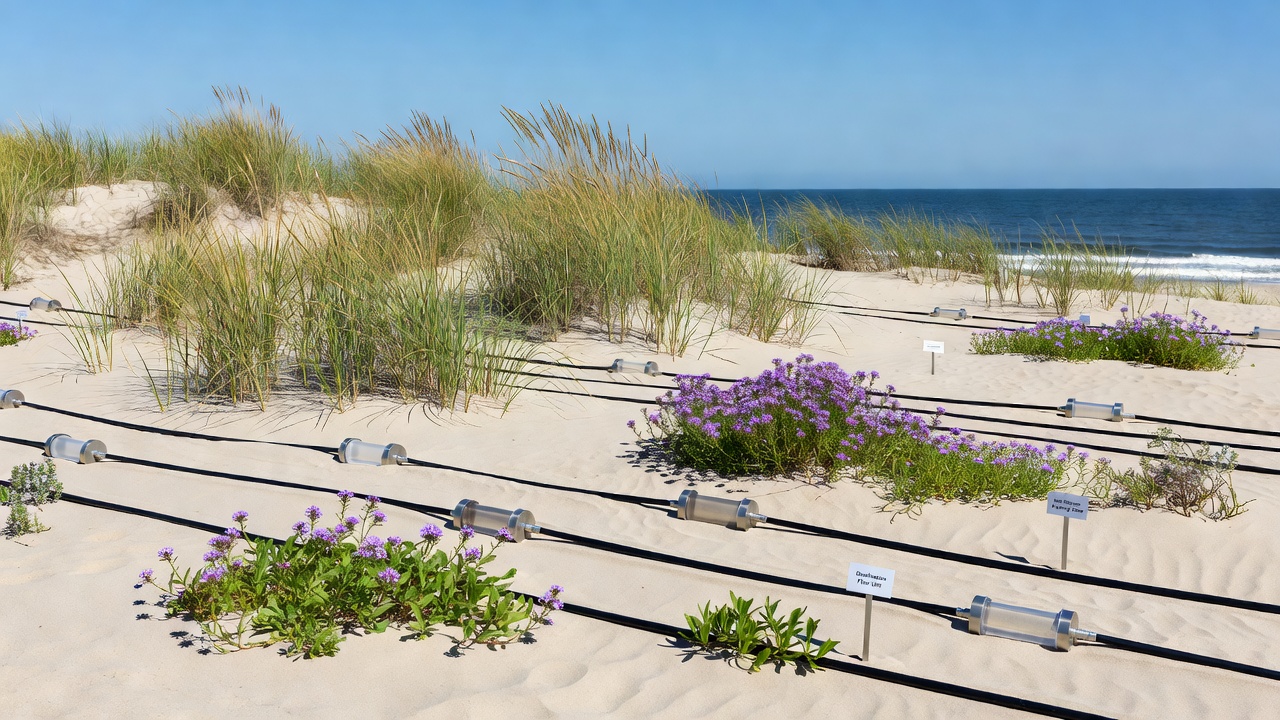
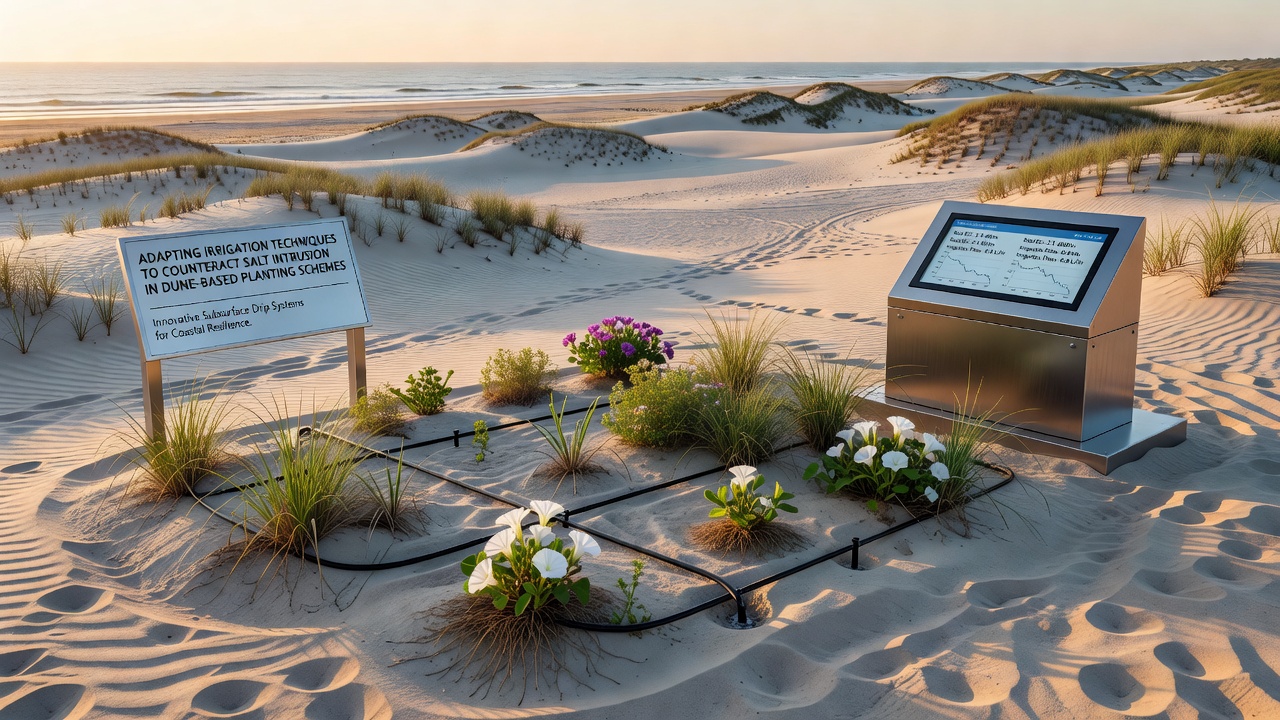
Modern adaptations favor subsurface drip lines placed below the primary root zone to deliver precise volumes of low-salinity water that promote downward leaching of accumulated salts, field trials show these systems reduce surface evaporation losses compared with overhead sprinklers while maintaining consistent soil moisture tension, operators monitor emitter flow rates and adjust pressures to avoid channeling that could concentrate salts in localized pockets.
Some schemes incorporate pulse irrigation cycles that alternate short applications with rest periods allowing gravity drainage, data indicates this method flushes sodium and chloride ions more effectively than continuous low-volume delivery, yet it demands careful calibration because excessive pulses can destabilize dune sand and trigger slumping on steeper faces.
Water Source Selection and Quality Management
Practitioners increasingly blend freshwater from deeper aquifers or collected rainwater with treated reclaimed sources to achieve target salinity thresholds below 2 dS/m for sensitive dune species, according to reports from the US Geological Survey such blending strategies have extended viable planting windows in intrusion-affected zones by maintaining acceptable electrical conductivity levels. Automated sensors embedded along irrigation lines provide real-time feedback on water quality allowing immediate dilution adjustments when tidal influences raise source salinity.
Desalination units powered by solar arrays appear in larger installations where freshwater access remains limited, these systems produce permeate that integrates directly into drip networks, engineers emphasize pretreatment filtration to prevent emitter clogging from residual minerals, case examples from Australian coastal projects demonstrate sustained plant cover when combined with scheduled soil flushing events timed to low-tide windows.
Monitoring Protocols and Adaptive Scheduling
Continuous soil moisture and salinity probes linked to weather stations enable dynamic scheduling that responds to both plant demand and intrusion forecasts, researchers compare baseline conductivity readings against post-irrigation samples to quantify leaching efficiency, adjustments occur weekly during peak intrusion seasons when evapotranspiration rates climb and concentrate residual salts.
Integration with remote sensing from satellite platforms adds spatial context by highlighting stressed vegetation patches that signal localized salt buildup, managers cross-reference these images with ground-truth data before modifying zone-specific irrigation volumes, this layered approach minimizes water waste while protecting dune stability against over-saturation events.
Conclusion
Effective adaptation hinges on combining targeted water delivery, rigorous source management, and responsive monitoring to keep root-zone salinity within tolerable ranges for dune flora, evidence from multiple coastal regions shows measurable improvements in plant survival rates when these techniques operate together rather than in isolation, ongoing refinement through field data continues to shape best practices as intrusion dynamics evolve with broader environmental changes.